By Virginia Mata | 31-Jul-20
An essential ingredient in both broad-based community organizing and Community Based Participatory Research (CBPR) is the development of relationships based on trust. In fact, both approaches—CBPR and community organizing—need and rely on a diverse group of people to build relationships based on trust, which ultimately serve as pathways to address inequities and to transform the ecosystems that sustain them. My own experience with community organizing began in February 2020. Shortly after I retired from the U.S. Probation Office, I decided to return to Holy Family Catholic Church in San Antonio, TX, which is the parish where I completed my First Communion. I did so because I wanted to give back to my old community, where I knew there was still so much need. Unbeknownst to me, Holy Family is a member institution of Communities Organized for Public Service and the Metro Alliance, better known as COPS/Metro, which is a powerful and well established community organizing organization in San Antonio. My experience with CBPR began when I enrolled in a CBPR course in the PhD program at the University of the Incarnate Word in July 2020. As I learned about CBPR , I was reminded of how COPS/Metro builds relationships, which I now share.
Inspiring Scripture
The first meeting I attended for COPS/Metro was an interfaith leaders’ retreat centered on leadership lessons from Moses as he led the Israelites out of bondage. I am sure many of us there in that retreat felt like Moses when he responded to God in Exodus, “O my Lord, I have never been eloquent….I am slow of speech and slow of tongue.” However, knowing that God was with him, Moses acted and led the Israelites out of Egypt. Using scripture in the retreat gave us direction and served as a reminder of our larger purposes in life. By the end of the retreat, I felt confident and inspired to get more involved.
Relational One-on-one Meetings
A few days after the leaders’ retreat, I met one of the COPS/Metro’s organizers for lunch—or what COPS/Metro calls a relational meeting. We each shared our stories of where we grew up and the issues that had an affect on us. She told me about moving to the United States as a teenager. I talked about my experience growing up in the West Side of San Antonio and the drug activity next door to our house, the murder of my 23-year-old brother, and about my mother working as a migrant farm laborer. I later met with other COPS/Metro leaders for coffee on a one-on-one basis where we each shared our stories. These meetings are designed to serve as an opportunity for two people to share their stories and interests, to begin building a public relationship. Building meaningful relationships (and inspiring public commitment) is also a hallmark of CBPR.
House Meetings/Pláticas
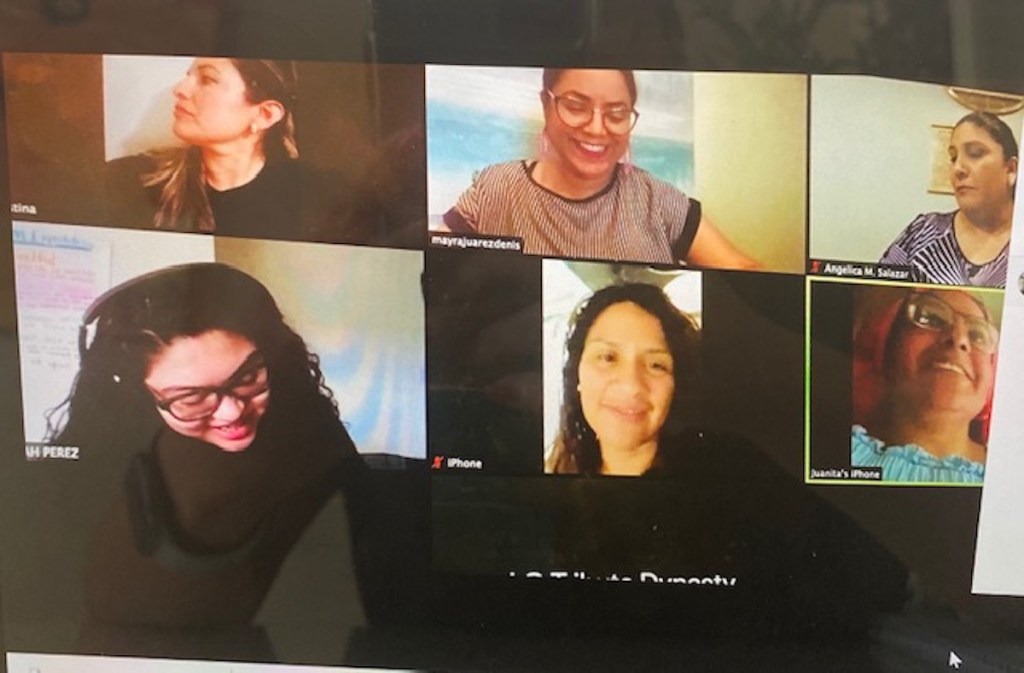
The one-on-one meetings were then followed by “house meetings.” As Mark Warren wrote in Community Building and Political Power in the American Behavioral Scientist in September 1998, as important as the issues are to COPS/Metro, the relationships that leaders develop are the foundation of their broad-based community organizing strategies. House meetings or pláticas (conversations) are groups of typically five leaders who meet to share their stories. Prior to COVID-19, these conversations occurred at our local church, but since COVID-19, most of these meetings now occur on Zoom. At these meetings, we learn from each other and share in public the pain we have in common. For example, we might share about issues regarding children being bullied, or immigrant parents not being allowed in schools without a Texas identification card. One final important step to the house meetings is that each of them ends with brief reflections/reactions from each participant. According to Nina Wallerstein and colleagues (well-known proponents of CBPR), a central tenet of CBPR is creating a unit of identity wherein members feel a sense of emotional connection and identification with others (Wallerstein, 2018). COPS/Metro leaders share a strong sense of connection, in part through these pláticas and check-out conversations.
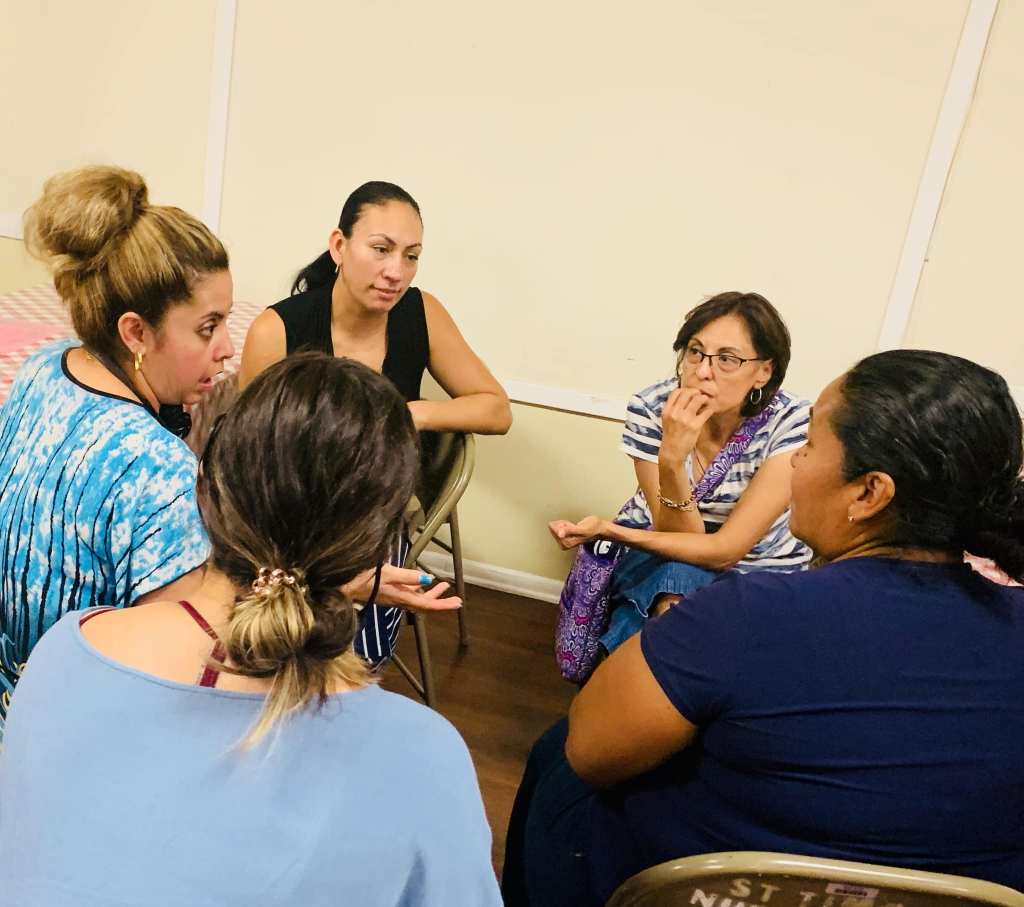
(Photo Credit: COPS/Metro)
Building Capacity
One of the techniques used by COPS/Metro to build capacity of its members is through observation and by training its leaders to do the work. When I joined COPS/Metro I had no idea that within a few weeks I would be chairing meetings with elected officials and local business leaders! I had no idea I would end up speaking before city council or, as they say, sitting at the table. COPS/Metro builds capacity by allowing their leaders to do the work. Whether it is instilling confidence, improving critical thinking skills, listening skills, communication skills, or giving them the leadership skills to act on behalf of their families and their interests, COPS/Metro builds its leaders’ capacity. As a CBPR academic practitioner, understanding how to build capacity is crucial to the CBPR process because capacity building benefits all the partners while at the same time helps the ongoing process of development (Wallerstein, 2018). The novel idea that learning and capacity is built by doing might help move others to action more quickly and encourage our educational processes to become better connected to real-life action.
Conclusion
When I joined COPS/Metro, I did so to help my community. I never imagined how much it would help me. COPS/Metro’s strategies work in unison to transform both the individual and the community. Whether it is using inspiring scripture, relational one-on-one meetings, house meetings, or building capacity, these strategies are powerful and transformative. However, this work does not happen overnight. In the words of Ernesto Cortes, Jr., the founder of COPS, “…building trusting relationships requires slow and patient work.” Romans 8:25 tells us, “…but if we hope for what we do not see, we wait for it with patience.” Change-work takes time and patience. COPS/Metro inspires us to hope with patience while we work for change in the community.
Virginia Mata is a COPS/Metro Leader from Holy Family Church, a PhD student at the University of the Incarnate Word, retired U.S. Supervisory Probation Officer and a retired Navy Reserve Intelligence Officer.
 Action Research for Community Health & Wellbeing
Leave a comment